How to Choose the Right Wood Finish for Your Project
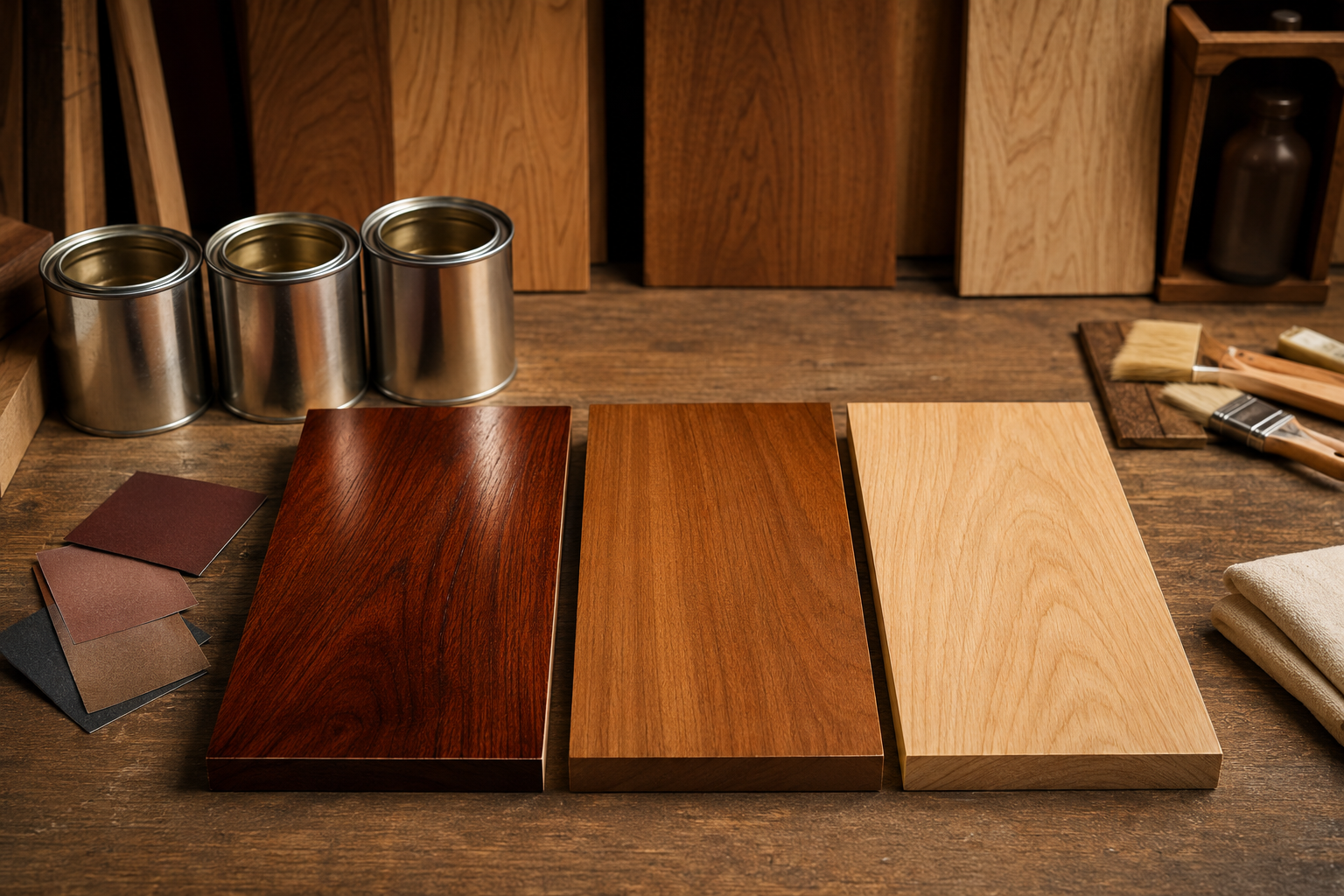
Wood is one of the most rewarding surfaces to work with, but it is also one of the most demanding. The finish you choose does far more than add colour or shine — it decides how the wood breathes, how it resists moisture, how it ages, and how easy it will be to repair years down the line. Choosing the wrong system can leave you with a surface that looks dull within months, peels at the edges, or yellows under sunlight. Choosing the right one protects your investment and keeps the grain looking alive for a decade or more.
In this guide we break down the three coating families most professionals rely on — PU (polyurethane), melamine, and NC (nitrocellulose) — and give you a practical framework for matching a finish to your surface, your usage, and the look you want.
Start With the Question Behind the Finish
Before comparing products, answer three questions honestly. First, how much wear will the surface face? A dining table, a shop counter, and a decorative wall panel live very different lives. Second, where will the piece sit — indoors, in a humid bathroom, or somewhere it catches direct sun? Third, what look are you after: a warm satin glow, a mirror-like high gloss, or a natural matte that barely shows it is coated at all? Your answers narrow the field quickly, because each coating family has a comfort zone where it clearly outperforms the others.
PU (Polyurethane): The Workhorse for High-Use Surfaces
PU finishes are the go-to choice when durability matters most. Polyurethane forms a thick, cross-linked film that resists scratches, hot cups, spilled liquids, and daily abrasion. That toughness makes it ideal for tabletops, kitchen shutters, wardrobes, doors, staircases, and any furniture that gets touched, wiped, and knocked every day.
Beyond strength, PU delivers depth. It sinks into the grain and builds a rich, three-dimensional clarity that makes premium timber look expensive. It is available across the full sheen range — from dead matte to full gloss — so you are not forced to trade protection for the look you want. The trade-off is that PU is a more involved system to apply: it usually needs correct mixing ratios, controlled recoat windows, and clean conditions to cure to its full hardness. Done properly, though, it rewards the effort with the longest service life of the three.
Melamine: The Balanced Choice for Interior Woodwork
Melamine coatings sit in a sweet spot between cost and performance, which is why they dominate interior furniture and panelling. They cure to a smooth, hard, close-grain film that feels refined to the touch and cleans up easily with a soft cloth. For bedroom sets, office furniture, cabinets, and wall units that live indoors away from heavy moisture, melamine offers reliable protection without the price or complexity of a full PU system.
Our Timber Gold Pro line is built exactly for this role. It lays down evenly, dries to a consistent sheen, and holds its clarity over time, giving craftsmen a dependable finish for volume work. Where melamine asks for care is in genuinely wet or high-abrasion settings — it is happiest indoors, on surfaces that see normal daily use rather than constant water contact or industrial wear.
NC (Nitrocellulose): Fast, Forgiving, and Easy to Repair
NC finishes earn their place through speed and simplicity. They dry quickly, apply smoothly, and — crucially — can be repaired by melting into the existing coat, so a scratch or blemish can be spot-fixed without stripping the whole piece. That repairability makes NC a favourite for decorative items, musical-instrument-style finishing, and workshops that need fast turnaround between coats.
The classic NC look is a soft, warm, slightly vintage sheen that many designers love for traditional furniture. The compromise is durability: an NC film is thinner and less resistant to heat, solvents, and heavy abrasion than PU. For pieces that will be handled gently or refreshed periodically, that is a fair exchange for the ease of application and repair.
Matching the Finish to the Job
Here is a simple way to decide:
- Heavy daily use or moisture exposure — tables, doors, kitchen units, staircases: choose PU for maximum protection.
- Everyday interior furniture and panelling — wardrobes, cabinets, office desks: melamine gives the best value-to-performance balance.
- Decorative or frequently refinished pieces — display items, traditional furniture, quick jobs: NC offers speed and easy repair.
Do Not Overlook Sheen and Colour
The same coat looks completely different at matte, satin, semi-gloss, and high gloss. Matte hides small surface flaws and suits modern, understated interiors. Satin is the most forgiving all-rounder. High gloss shows off flawless prep and deep grain but magnifies every dust particle and sanding mark, so it demands disciplined surface preparation. Think about the room, the light, and how much imperfection you are willing to reveal before you commit to a sheen.
Preparation Decides the Outcome
No finish can rescue a poorly prepared surface. Sand progressively, remove all dust, and — for open-grain timbers — consider whether a sanding sealer or grain filler will give you the smoothness you are after. A well-sealed base lets the topcoat build evenly and stops the finish from sinking unevenly into soft and hard grain. The finish is only the final chapter of a story that begins with good prep.
Think About the Whole Lifespan
A finish is not only about day one. Ask how the piece will be cleaned, whether it will ever be refinished, and how it should age. PU tends to hold up longest with minimal maintenance; melamine stays crisp indoors with simple wiping; NC is the easiest to touch up but expects occasional attention. Choosing with the full lifespan in mind saves money and disappointment later.
Interior Versus Exterior Wood
One factor quietly overrides almost every other decision: whether the wood lives indoors or outdoors. Exterior timber faces direct sunlight, rain, and constant expansion and contraction as temperature and humidity swing through the day. A finish that performs beautifully on an indoor cabinet can crack, fade, or peel within a season if it is asked to survive on a gate or an outdoor bench. Exterior work generally demands the toughest, most UV-stable and moisture-resistant systems, applied in adequate film thickness and refreshed on schedule. Interior pieces, protected from the elements, give you far more freedom to prioritise looks and feel over raw weather resistance. Always place your project on this indoor-outdoor axis before you shortlist a finish.
Common Mistakes to Avoid
A few errors cause the majority of disappointing results. Choosing a finish for looks alone while ignoring how the piece will be used leaves you with a beautiful surface that fails fast. Skipping the sealer on open-grain timber produces a patchy, uneven build. Applying the next coat before the previous one has cured traps solvents and softens the film. And mixing incompatible products across coats can cause lifting or poor adhesion. Sidestep these, and even a modest system will outperform an expensive one used carelessly.
The Bottom Line
There is no single best wood finish — only the best finish for a specific surface, environment, and expectation. PU protects, melamine balances, and NC forgives. Match the system to how the piece will actually be used, respect the preparation, and pick a sheen that flatters the space, and your woodwork will look intentional and last for years.
Still unsure which system fits your project? Our team helps craftsmen and homeowners match the right coating to their surface and usage every day. Contact us for tailored guidance, or explore the Timber Gold Pro range to see our wood-finishing options in detail.
Frequently Asked Questions (FAQs)
1. What is the most durable wood finish available?
PU (polyurethane) finishes are the most durable option for wood. They form a thick, cross-linked film that resists scratches, moisture, heat, and daily abrasion, making them ideal for tabletops, kitchen shutters, stairs, and heavily used furniture.
2. What is the difference between PU, melamine, and NC finishes?
PU offers the highest durability and is best for high-use or moisture-exposed surfaces. Melamine balances cost and performance for everyday interior furniture and cabinetry. NC dries fastest, is easiest to repair, and suits decorative or frequently refinished pieces.
3. Can I use an interior wood finish on outdoor furniture?
No. Interior finishes are not designed to handle direct sunlight, rain, and temperature swings. Exterior wood requires UV-stable, moisture-resistant coatings. Using an interior finish outdoors leads to cracking, fading, or peeling within a season.
4. Do I need to sand wood before applying a finish?
Yes. Sanding is essential for creating a smooth surface and ensuring the finish adheres properly. Sand progressively from coarser to finer grit and always remove all sanding dust before applying the first coat.
5. What causes a wood finish to peel or bubble?
Common causes include insufficient sanding, skipping a sealer on open-grain timber, applying the next coat before the previous one has fully cured, or using incompatible products across coats. Proper preparation and following manufacturer-recommended drying times prevent most failures.
6. How do I choose the right sheen for a wood finish?
Matte hides surface flaws and suits modern, understated interiors. Satin is the most forgiving all-rounder. High gloss shows off flawless prep and deep grain but magnifies every imperfection, so it demands the most disciplined surface preparation of any sheen level.
7. Can NC finish be repaired without stripping the whole piece?
Yes. NC can be melted into the existing coat, so a scratch or blemish can be spot-fixed without stripping and refinishing the entire surface. This makes it a favourite for decorative furniture and workshop pieces that need fast turnaround.
Need help choosing the right finish?
Talk to our team or request a tailored quotation for your project.