Painting Aluminium & UPVC Window Frames: The Complete Recoating, Adhesion Primers & 2K PU Guide for Modern Indian Homes
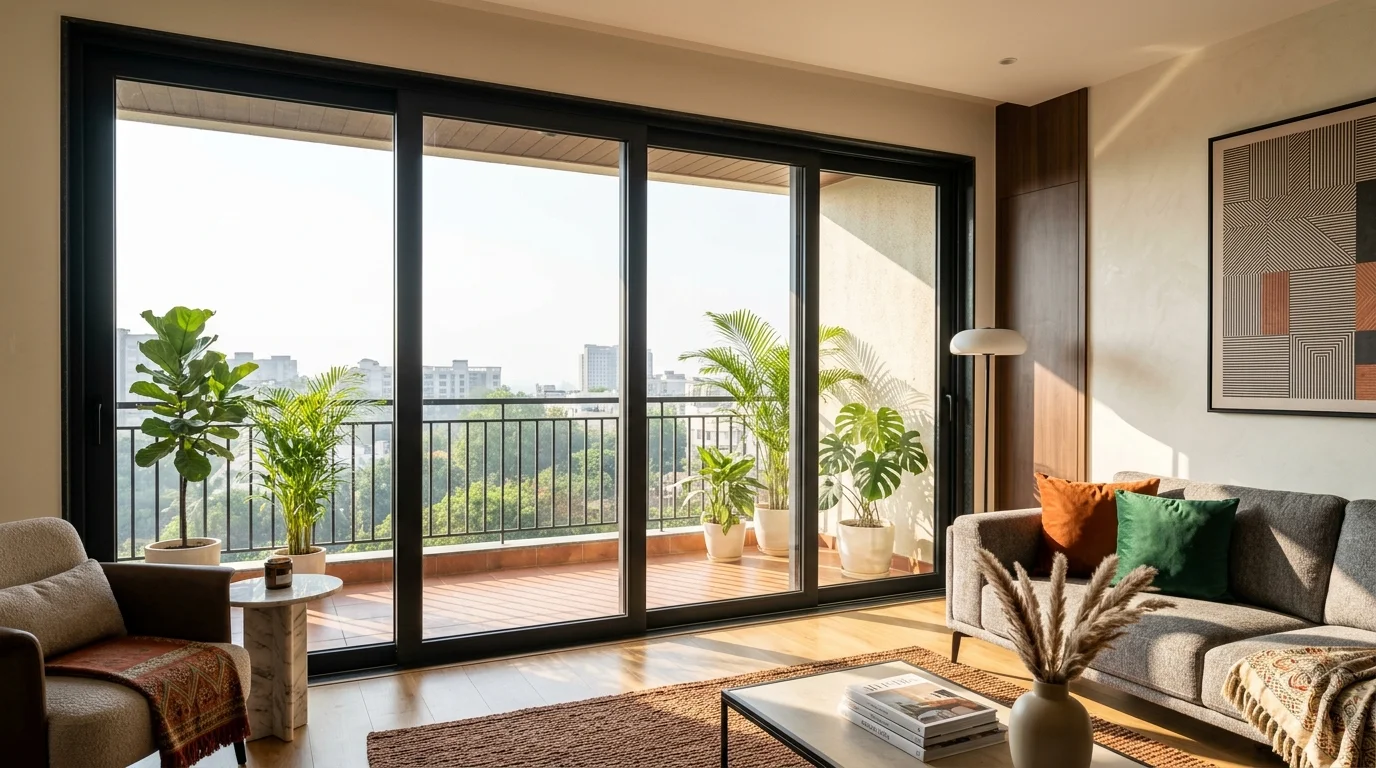
Walk into almost any contemporary Indian apartment or villa across Mumbai, Pune, Bengaluru, Delhi NCR, Hyderabad, or Ahmedabad, and you will find aluminium sliding sections or extruded UPVC casement windows. Yet after six to ten years of direct exposure to India's intense UV radiation, heavy monsoon rains, dust, and humidity, their original factory surface tells a very different story.
Builder-grade white UPVC extrusions yellow unevenly under unfiltered sunlight, trapping soot in micro-pores that regular detergents cannot remove. Furthermore, during interior renovations, homeowners who invest in sophisticated palettes—warm neutrals, charcoal, greige, or wood panelling—find themselves stuck with stark white or scuffed off-silver window frames that clash with their new design scheme.
The conventional advice from local neighbourhood painters has historically been dismissive: "You cannot paint aluminium or UPVC windows; the paint will peel off in three months. If you want a new colour, you must replace the entire window assembly." For a typical three-bedroom home with large sliding balcony doors, complete frame replacement routinely costs between ₹2,50,000 and ₹5,00,000. It also damages marble sills, cracks interior plaster, causes waterproofing leaks, and requires society permissions. The claim that you cannot paint these profiles is outdated. With engineered substrate-specific primers, meticulous multi-stage degreasing, and industrial two-component (2K) aliphatic polyurethane coatings, recoating existing window frames produces an automotive-grade, chip-resistant finish lasting seven to ten years.
Why Standard Paints Inevitably Fail on Aluminium and UPVC
Standard architectural paints—such as water-based emulsions or single-pack alkyd oil enamels—rely entirely on mechanical adhesion. They require microscopic pores and roughness in the substrate so the dried resin binder can physically anchor itself. Neither powder-coated aluminium nor extruded UPVC provides this profile.
Unplasticized Polyvinyl Chloride (UPVC) is a rigid, non-porous thermoplastic with very low surface energy. In addition, UPVC expands and contracts significantly under Indian summer heat (up to 55°C) and cool winter nights. Standard synthetic enamel lacks film elasticity; within weeks of thermal movement, shear stress tears the brittle paint away from the plastic, causing peeling sheets.
Aluminium presents a distinct barrier: rapid surface passivation. Bare aluminium rapidly forms an inert, slick oxide film that rejects standard paint binders. Anodised aluminium features a dense, non-porous oxide layer. Applying ordinary primer over anodised or bare aluminium causes rapid electrolytic disbondment and peeling.
Achieving permanent durability requires a chemical approach: abrading the substrate, applying a bridge primer that chemically bonds to both the profile and the topcoat, and finishing with flexible, UV-impervious polyurethane.
Evaluating Your Window Substrate: Profile Types and Requirements
Identify your window frame substrate to select the correct preparatory and priming pathway:
1. Weathered Powder-Coated Aluminium: Weathered powder coating forms an exceptional anchor for 2K coatings once surface chalk is washed away and the cured resin is lightly scuffed with fine abrasive pads.
2. Anodised Aluminium: Hard, non-porous anodised surfaces require thorough scuffing with aluminium oxide abrasives and an acid-etch PVB wash primer to chemically bite into the metal.
3. Bare Extruded Aluminium: Raw aluminium requires solvent degreasing followed immediately by an etch wash primer or 2K epoxy primer before passive oxides reform.
4. Rigid Extruded UPVC: Extruded UPVC requires chemical degreasing and a chlorinated polyolefin (CPO) vinyl adhesion primer. Any peeling decorative foil must be trimmed back to sound edges.
Step-by-Step Surface Preparation: The Contractor Protocol
Coating failure on architectural profiles is almost always caused by inadequate prep. Cooking oil fumes, traffic soot, and silicone sealant residues repel paint, creating fisheyes. Follow this sequence:
Step 1: Deep Degreasing and Silicone Removal. Wash with an industrial alkaline degreaser or TSP in warm water. Inspect perimeter silicone beads where glass meets the frame. Paint will never adhere to silicone; slice away smeared silicone with a razor scraper and wipe edges clean.
Step 2: Mechanical Abrasion. For UPVC and weathered powder coatings, use maroon (320–400 grit) non-woven abrasive pads (Scotch-Brite) rather than coarse sandpaper. Coarse paper gouges soft UPVC, leaving visible scratches. Rub in uniform circular motions until glossy reflections become a satin-matte surface. For anodised aluminium, wet-sand using 320-grit silicon carbide waterproof paper lubricated with water.
Step 3: Solvent Wipe-Down and Dust Removal. Vacuum track corners thoroughly. Wipe abraded profiles using lint-free microfiber rags saturated with isopropyl alcohol (IPA). On UPVC, avoid aggressive thinners like NC thinner or acetone, which soften vinyl and warp fine glazing beads. IPA evaporates cleanly without leaving residue.
Step 4: Precision Masking of Glass, Tracks, and Gaskets. Apply 14-day UV-resistant crepe masking tape to glass edges, leaving a 0.5-millimetre gap before the frame rebate. This gap allows paint to form a seal over the glass-to-frame joint, preventing wind-driven monsoon seepage. Mask black EPDM rubber gaskets completely—paint on rubber cracks and jams sliding mechanisms. Mask lower stainless-steel tracks where roller friction occurs.
The Primer Chemistry: Choosing the Right Anchor
The primer acts as the molecular bridge between an inert substrate and the tough decorative topcoat:
For Aluminium: Use a two-component (2K) polyamide-cured epoxy primer or acid-etch wash primer. The epoxy primer creates a dense film that locks out moisture and bonds tenaciously to abraded powder coating and bare metal. It chemically cross-links with the subsequent polyurethane topcoat, fusing into an unbreakable barrier.
For UPVC Extrusions: Use a specialized plastic adhesion primer formulated with modified chlorinated polyolefins (CPO). These primers contain active carriers that soften the surface layer of the UPVC at the molecular level, allowing resin chains to interpenetrate the vinyl matrix before drying.
Selecting the Topcoat: Why 2K Polyurethane Is Essential
When selecting the finish coat for window frames in India, single-pack enamel paints or wall emulsions must never be used. Window frames endure frequent handling, contact with rings and keys, daily wiping with wet cloths, and severe thermal stress.
The benchmark for architectural window frame recoating is an aliphatic two-component (2K) polyurethane coating system, such as Zorvanta Italian PU Gold Pro or Zorvanta PU Enamel Pro. Two-pack polyurethanes combine a hydroxyl-functional acrylic resin base with an aliphatic polyisocyanate hardener. Aliphatic polyurethanes provide total resistance to harsh UV photo-degradation and chemical atmospheric breakdown, ensuring that dark charcoals, architectural greys, and rich bronze tones will not fade, yellow, or chalk under relentless Indian sunshine.
Furthermore, 2K polyurethane cures through an internal chemical cross-linking reaction rather than simple solvent drying. This produces an extremely tough, elastic polymer film that resists scratching, impact, cleaning chemicals, and grease. For sheen level, a satin or eggshell matte finish (20% to 35% gloss) is strongly recommended, replicating the premium powder-coated look of luxury European fenestrations.
Application Methodology: Spray vs High-Density Foam Roller
Application technique depends primarily on whether the site is undergoing full civil renovation or is an occupied, furnished residence:
Method A: Low-Pressure HVLP Fine-Finish Spraying (Unoccupied Homes & Balconies). An HVLP turbine spray unit with a 1.2mm to 1.4mm nozzle produces an ultra-smooth finish equal to original factory coatings. Setting pressure between 22 and 26 PSI minimises overspray. Mask the room with polythene sheeting, and ensure applicators wear organic vapour respirators. Apply two wet coats at right angles with a 20-minute flash-off between coats.
Method B: High-Density Flocked Foam Roller and Tipped Brush (Occupied Residences). In furnished apartments where spray mist is unacceptable, use high-density closed-cell foam mini-rollers (100mm) paired with a fine-tipped angled synthetic sash brush. Add 5% to 8% slow-evaporating PU retarding reducer to the 2K mixture. Roll the paint on evenly and immediately 'tip off' by lightly stroking downward with the dry brush tips. The slow reducer eliminates brush marks before curing.
The Zorvanta Specification for Architectural Window Profiles
At Zorvanta Paints, we engineer coatings designed specifically for India's demanding environmental conditions—elevated atmospheric humidity, intense solar heat, and heavy airborne dust. For refinishing aluminium sliding windows and UPVC balcony installations, our recommended specification includes:
Substrate System 1 (Weathered Aluminium / Anodised Profiles): Apply one full coat of Zorvanta Metal Etch & Tie-Coat Epoxy Primer at 35 microns dry film thickness. Follow after 4 hours with two coats of Zorvanta PU Enamel Pro in the client's chosen architectural shade (anthracite grey, architectural black, bronze, or off-white) in a satin finish.
Substrate System 2 (Extruded UPVC Window Assemblies): Treat abraded vinyl profiles with Zorvanta Vinyl Adhesion Promoter, followed by two full coats of Zorvanta Italian PU Gold Pro. This provides exceptional scratch hardness, flexibility under thermal cycling, and non-yellowing UV stability.
Explore our architectural metal and wood coatings in our products catalog, review our practical guide on metal surface corrosion protection, or reach out through our contact portal for technical specifications and customized project quotations.
Frequently Asked Questions (FAQs)
1. Can you really paint UPVC and aluminium window frames without peeling?
Yes. Ordinary paints peel because of poor prep. When UPVC is treated with a vinyl adhesion primer, or aluminium with a 2K epoxy tie-coat, the bond is molecular. Topped with aliphatic 2K polyurethane, the coating resists weather and thermal movement without peeling.
2. How long do recoated window frames last in Indian climates?
A properly prepped and applied 2K polyurethane system lasts seven to ten years. Aliphatic 2K resins resist UV photodegradation, meaning dark charcoals and blacks will not fade, yellow, or chalk under harsh sunlight and monsoons.
3. Should window glass panes be removed before painting?
No. Removing double-glazed units damages compression gaskets. Instead, apply 14-day UV-resistant crepe tape to the glass, leaving a 0.5mm gap from the frame rebate so paint forms a seamless moisture seal.
4. Can sliding tracks where rollers glide be painted?
No. Never paint the internal bottom roller tracks or glide channels. Heavy sliding friction quickly scrapes off paint, creating black marks and jamming bearings. Paint only visible vertical and exterior frame faces.
5. What is the cure time before locking freshly painted windows?
While 2K PU feels touch-dry in 2 to 4 hours, allow 24 to 48 hours before closing windows tightly to prevent gasket press-welding. Full chemical cure takes seven days before aggressive cleaning.
Need help choosing the right finish?
Talk to our team or request a tailored quotation for your project.