Painting Your Boundary Wall & Compound Wall: The Complete Guide to Long-Lasting Exterior Finishes for Indian Properties
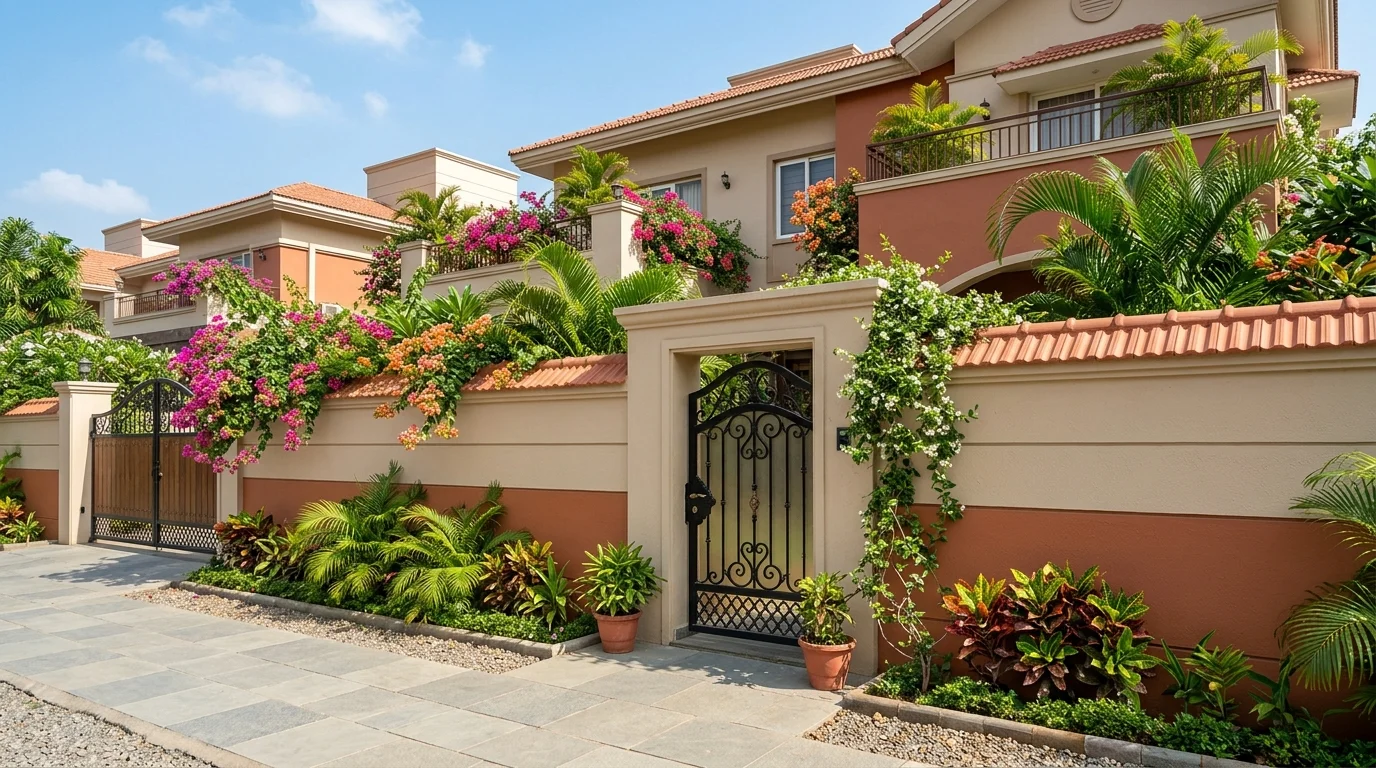
Walk down any residential lane across Ahmedabad, Pune, Bengaluru, Jaipur, or Hyderabad, and you will notice a striking pattern: homes with immaculate interiors and fresh facades frequently have boundary walls looking ten years older than the house itself. Flaking plaster along the base, dark algae trails from coping stones, white efflorescence through paint films, and spiderweb cracks are almost treated as inevitable features of an Indian compound wall. Yet the boundary wall is the very first architectural element any visitor encounters.
Most homeowners consider the compound wall a low-priority surface. When renovating, interior rooms receive detailed shade consultations, and the main facade receives premium weatherproof coatings. The boundary wall, by contrast, often gets whatever leftover exterior emulsion remains in the cans, diluted heavily with water, applied hastily over dirty, unprimed masonry. Within twelve to eighteen months, that shortcut reveals itself in blistering paint, fungal discolouration, and peeling sheets.
Achieving a boundary wall finish lasting five to seven years does not require exorbitant expense. It requires understanding why freestanding walls fail faster than building facades, addressing ground moisture migration, preparing masonry correctly, and applying an elastomeric, breathable coating over an alkali-resistant primer.
Why Boundary Walls Fail Faster Than Main Building Facades
Homeowners often ask why the same paint lasts seven years on the house facade but fails within two years on the perimeter wall. The reason lies in unique structural and environmental stresses.
1. Dual-Face Weather Exposure: A building's exterior wall has one face sheltered indoors. A freestanding boundary wall has two exposed faces. In summer, the sun-facing side reaches 50°C while the opposite side stays in shade. This temperature gradient creates shear stress as masonry expands unevenly, triggering cracks that tear paint films apart.
2. Absence of a Damp-Proof Course (DPC): Residential buildings are constructed with a horizontal damp-proof membrane above the plinth beam to prevent subsoil moisture from rising into walls. Boundary walls are almost universally built directly on brick footings without a DPC. During monsoon months, surrounding soil stays waterlogged. Subsoil water travels upward through brickwork and mortar capillaries up to 900mm above ground level, pushing standard paint films off the masonry from behind.
3. Severe Efflorescence: Ground moisture carries dissolved mineral salts from soil and mortar. When water reaches the plaster surface and evaporates, these salts crystallise into solid deposits—efflorescence. The mechanical pressure exerted by growing salt crystals easily ruptures brittle paint, leaving flaky white powder and bare plaster.
4. Heavy Biological Infestation: Constant capillary moisture and shade from boundary trees create an ideal environment for algae and fungal colonies. In monsoon-heavy belts, untreated compound walls turn blackish-green within weeks.
5. Low-Level Mechanical Impact: Parked two-wheelers, gardening tools, stray animals, and water splashes from car washing subject the lower 600mm of the wall to continuous abrasion that standard emulsions cannot resist.
Essential Surface Preparation: The Foundation of Durability
Applying an exterior coating over improper surface preparation guarantees failure. On a compound wall, preparation requires more rigour than any interior room.
Eradicate Algae at the Root: Never merely scrape dry algae or rely on water jetting alone, which leaves microscopic spores alive inside plaster pores. Trapped spores germinate and push paint off. Wash affected masonry with a biocidal wash or a 1:3 solution of household bleach and water. Scrub thoroughly with a stiff nylon brush, let it soak for twenty minutes, then rinse with clean water. Allow forty-eight hours of warm weather before proceeding.
Neutralise Efflorescence Deposits: Where white salt blooming appears, scrape away loose crusts with a wire brush. Never douse active efflorescence with plain water, which dissolves salts back into brickwork only to re-crystallise later. Once mechanically brushed clean, wash the area with a mild 5% to 10% amidosulfonic acid solution to neutralise surface salts. Flush with water and let dry completely. If ground dampness is perennial, apply a deep-penetrating silane-siloxane water repellent to bare masonry before priming.
Treat Cracks with Flexible Polymer Mortar: Never use gypsum or rigid interior putty on exterior compound walls. Hairline fractures must be opened into a V-groove using a scraper, dusted clean, primed, and packed with flexible acrylic crack filler. For structural gaps wider than 3mm, use a polyurethane mastic sealant capable of accommodating joint movement.
Wash Away Traffic Soot and Grease: Perimeter walls adjacent to streets accumulate an oily film of diesel exhaust, cooking smoke, and road bitumen. Wash plaster using trisodium phosphate (TSP) or an alkaline degreaser, then rinse clean to ensure dependable coating adhesion.
The Correct Primer Chemistry: Non-Negotiable Protection
Skipping primer on an exterior perimeter wall is the fastest way to destroy a paint job. Fresh cement plaster and aging mortar are aggressively alkaline (pH 11 to 13). When water-based paints touch raw alkaline substrates without a barrier, resins suffer saponification—breaking down into sticky soaps that blister and peel.
For New or Unpainted Masonry: Apply a uniform coat of deep-penetrating alkali-resistant exterior acrylic primer. This primer seals porosity variations, strengthens friable plaster, and forms a chemical shield against alkali burn.
For Damp-Prone Lower Plinths: On the bottom 600mm to 900mm where damp rises, apply an efflorescence-resistant damp-lock primer. These specialized primers penetrate into micro-capillaries and cure into an insoluble crystalline matrix that holds back hydrostatic pressure and salt migration.
For Previously Painted Sound Walls: If existing paint is firmly adhered with no flaking, scrape away chalking layers, sand lightly with 120-grit emery paper, and apply a high-adhesion exterior bonding primer to anchor the new system.
Selecting the Right Exterior Topcoat for Compound Walls
Perimeter walls require coatings specifically engineered for flexibility, breathability, and biological resistance.
1. Elastomeric Acrylic Emulsions: This is the premier choice for Indian boundary walls. Elastomeric paints contain flexible acrylic resins with elongation properties up to 150%. As the wall expands in daytime heat and contracts at night, the paint film stretches and recovers without cracking, bridging recurring hairline fractures.
2. Silicone-Modified Exterior Coatings: Silicone polymers impart hydrophobic properties: rainwater beads immediately and rolls off the surface. Importantly, silicone coatings maintain high vapour permeability, permitting subsoil moisture inside the wall to escape as vapour rather than blistering the paint film.
3. Heavy-Duty Encapsulated Biocides: Ensure your specified topcoat features slow-release encapsulated anti-algal and anti-fungal additives that resist rainfall washout and keep walls clean for years.
Colour and Finish Selection: Balancing Aesthetics with Practicality
Colour choice on a boundary wall is not purely decorative; it directly impacts maintenance effort and longevity.
The Two-Tone Plinth Strategy: The most durable design approach pairs a darker shade on the lower 600mm to 750mm (the splash zone) with a lighter shade above. Earth tones such as deep terracotta, charcoal grey, burnt umber, or olive brown at the base hide mud splatters, tyre scuffs, and road grit. A coordinating lighter tone—such as warm sand, biscuit, or pale stone—on the upper wall maintains welcoming curb appeal.
Inorganic vs Organic Pigments: Vibrant exterior hues rely on organic dye molecules that degrade rapidly under intense Indian UV radiation. For perimeter walls facing direct sunlight all day, select earthy shades formulated with inorganic mineral oxides (iron oxides, ochres, chromium oxides) that hold their tone over five to eight years without noticeable fading.
Opt for Low-Sheen or Satin Finishes: Avoid dead-flat matte finishes, which possess microscopic porosity that traps airborne dust and organic matter. Conversely, avoid high-gloss enamels on masonry, which exaggerate plaster irregularities. A refined low-sheen satin finish sheds water and grime effectively while concealing minor surface waviness.
The Zorvanta Specification for Indian Boundary Walls
At Zorvanta Paints, we engineer coating systems tailored to India's challenging climate. For residential perimeter walls, our recommended specification includes:
Base Preparation: Clean thoroughly, treat biological growth with Zorvanta Biocidal Wash, and fill surface cracks with Zorvanta Flexible Polymer Crack Filler.
Primer Stage: Apply one liberal coat of Zorvanta Alkali-Resistant Exterior Primer. On low plinth zones affected by subsoil moisture, apply Zorvanta Damp-Barrier Masonry Primer.
Topcoat Stage: Apply two coats of Zorvanta Exterior Weathershield Elastomeric Emulsion in your chosen shade, allowing four to six hours of drying time between coats. This system provides superior crack bridging, UV stability, and proven resistance to monsoon dampness.
Explore our complete architectural coatings in our products catalog, consult our guide on choosing exterior wall paint, or connect with our technical specialists via our contact portal for personalized project estimates.
Frequently Asked Questions (FAQs)
1. How frequently should a boundary wall be repainted in India?
A boundary wall coated with high-grade elastomeric exterior paint over an alkali-resistant primer typically maintains its protective film and aesthetics for five to seven years. In contrast, basic cement wash or cheap unprimed emulsions fail within eighteen to twenty-four months.
2. Can I apply cement paint directly over an old compound wall?
Cement paint is an outdated, rigid coating that lacks elasticity. Applying it over previously painted acrylic surfaces leads to rapid flaking. Modern exterior acrylic or elastomeric emulsions provide far superior adhesion, flexibility, and washability.
3. How can I stop recurring green algae on shady compound walls?
Scrub the wall with a diluted bleach solution (1:3 with water) to sterilise pores before painting. Then apply an exterior paint formulated with long-lasting encapsulated biocides. Trimming overhanging tree branches to allow direct sunlight also helps keep walls dry.
4. What is the remedy for white salt powder (efflorescence) ruining paint?
Never paint directly over efflorescence. Scuff away dry salt crystals using a wire brush, treat with a mild neutralising acid wash, let dry completely, and seal with a dedicated damp-barrier primer before applying the topcoat.
5. Why is a darker colour recommended for the bottom of compound walls?
During monsoon downpours, muddy rainwater splashes up to 600mm from the ground. A darker plinth band disguises soil staining, splash-back, and vehicle tyre scuffs, keeping your boundary wall looking freshly painted for years.
Need help choosing the right finish?
Talk to our team or request a tailored quotation for your project.