The Complete Guide to Eco-Friendly & Low-VOC Paints: Healthier Homes, Better Air Quality
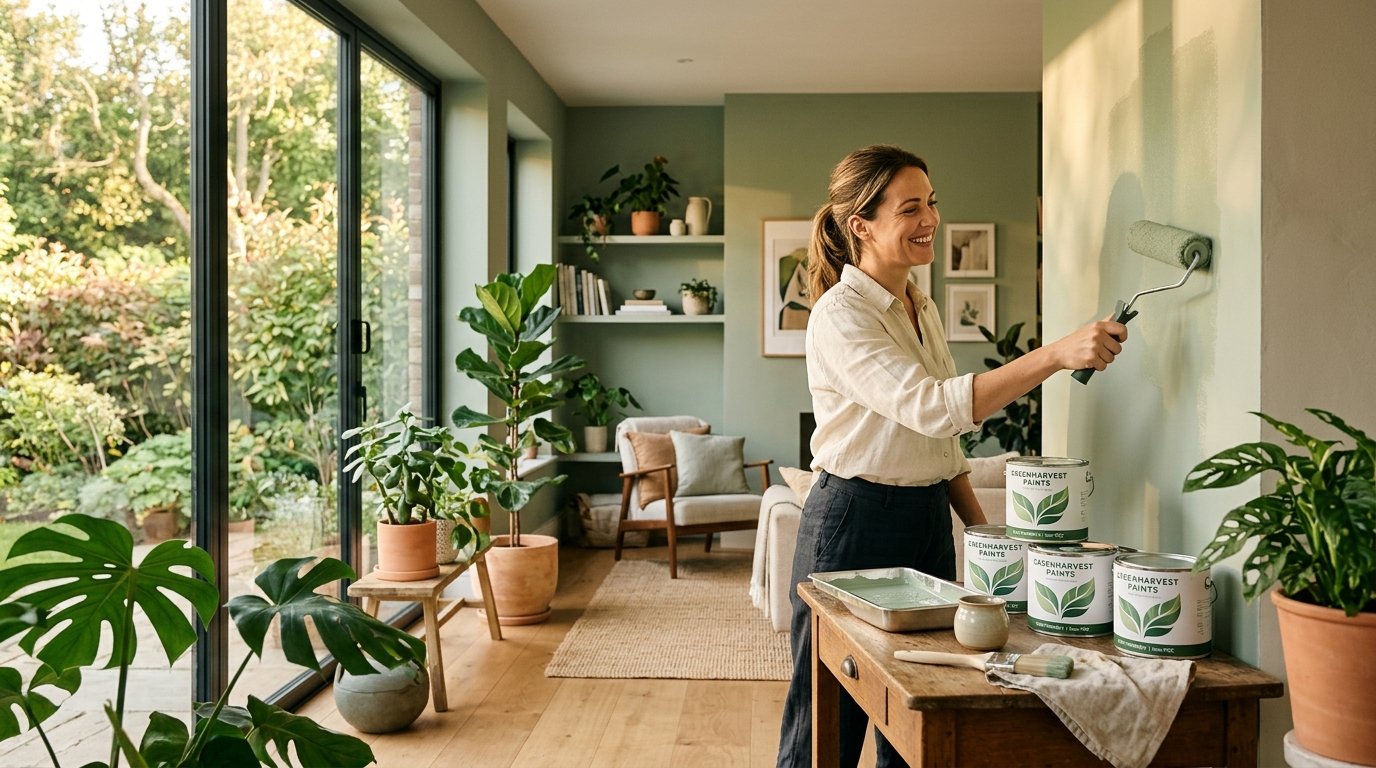
Most people associate the smell of fresh paint with something clean — a newly decorated room, a home improvement completed. That association is misleading. The smell that fills a freshly painted room is largely the smell of volatile organic compounds, or VOCs, evaporating from the coating as it cures. And unlike a pleasant scent that signals cleanliness, VOCs are chemical emissions that can irritate the respiratory system, trigger headaches, aggravate asthma, and in some formulations contribute to longer-term indoor air quality problems that persist well beyond the initial drying period.
This is not a small or niche concern. Indoor air quality in tightly constructed modern homes and apartments — particularly in cities — is often several times worse than outdoor air quality, and paint is a significant contributor. Understanding the role that paint formulation plays in indoor air quality, and knowing how to choose products that protect the people living in the space, has become an important part of specifying any paint scheme.
This guide covers what VOCs are, how they work, what the different classifications mean in practical terms, which rooms matter most, and how to select and apply low-VOC and eco-friendly paints without compromising on the durability and colour quality that any paint job demands.
What Are VOCs and Why Do They Matter?
Volatile organic compounds are carbon-based chemicals that evaporate readily at room temperature. In conventional solvent-based paints, VOCs include substances like toluene, xylene, benzene derivatives, and formaldehyde-releasing compounds that serve as solvents, driers, and biocides. Even in water-based formulations, VOCs are present in the form of co-solvents, preservatives, and coalescing agents that help the film form correctly as water evaporates.
The problem is dual. During and immediately after application, VOCs off-gas at relatively high concentrations — the "new paint" smell that can cause headaches and eye irritation. But the off-gassing does not stop when the smell fades. Many VOCs continue to evaporate from cured paint films at lower concentrations for weeks, months, and in some formulations, years. In a well-sealed room, those emissions accumulate. Over time, in a well-insulated home with limited air exchange, chronic low-level exposure to paint-derived VOCs is a real and measurable phenomenon.
Children are disproportionately affected. They breathe more air relative to their body weight than adults, spend more time close to floor level where some VOC concentrations are higher, and have developing respiratory and neurological systems that are more sensitive to chemical exposures. Painting a nursery or a child's room with a conventional solvent-heavy formulation is one of the higher-risk applications of conventional paint in a domestic setting.
People with asthma, allergies, or chemical sensitivities are similarly vulnerable. Pregnant women, elderly residents, and anyone with compromised respiratory health will experience the effects of high-VOC environments more acutely. Choosing a low-VOC or zero-VOC formulation in these contexts is not a premium indulgence — it is a basic health consideration.
Understanding VOC Ratings: What the Numbers Mean
Paint VOC content is measured in grams per litre (g/L) of the product as packaged, not including any tinting base or added colorants. Different rating systems use different thresholds, but a broadly accepted framework looks like this:
- Zero-VOC: Defined as less than 5 g/L. These are the cleanest interior paints available in a standard water-based range. The residual 5 g/L allowance accounts for trace compounds that are very difficult to eliminate entirely from a commercially viable formulation without compromising performance.
- Low-VOC: Typically less than 50 g/L for interior paints, and less than 100 g/L for exterior. These formulations represent a significant reduction from conventional paints, which often range from 150 to 400 g/L in solvent-based variants, and 50 to 150 g/L even in conventional water-based versions.
- Conventional: Any formulation above the low-VOC threshold. Solvent-based paints — alkyd enamels, oil-based primers, many industrial coatings — almost always fall in this category. They are not inherently inferior products, but they are not appropriate for enclosed domestic spaces without adequate ventilation.
One important caveat: the VOC rating on the base paint can change significantly when colorants are added. Dark and deeply saturated tints often require more pigment concentrate, which itself may contain VOCs. A paint labelled zero-VOC in its white base may become low-VOC once tinted to a deep charcoal or navy. Ask your paint supplier specifically about the VOC content of the tinted product if this matters for your application.
Which Rooms Matter Most — and Why
Not every room presents the same risk profile when it comes to VOC exposure, and a room-by-room approach to specification makes practical and economic sense.
Nurseries and children's bedrooms are the highest priority for zero-VOC or certified eco-friendly formulations, for the reasons described above. Children spend a disproportionate amount of time in these rooms, often sleeping with the door closed in a relatively sealed environment. The cumulative exposure over years of occupancy, even from low-level off-gassing in a cured film, is meaningfully different from a room used only occasionally. This is one context where there is no practical argument for using anything other than the cleanest available formulation.
Master bedrooms are the second priority. Adults spend roughly a third of their lives in their bedroom, and much of that time with the ventilation reduced by closed windows and doors. Long-term exposure to chronic low-level VOC emissions is most significant in the room where people spend the most continuous hours.
Living rooms and family areas benefit from low-VOC specification, particularly in urban apartments where natural ventilation is limited by the surrounding urban environment. Balcony doors and windows in high-density urban settings are often kept closed for noise and air pollution reasons — which means the indoor air exchange rate is lower, and paint-derived VOC accumulation is proportionally higher.
Home offices have become a priority in recent years as remote work has extended the hours people spend in these spaces. A home office that was previously used for a few hours in the evening is now a primary working environment for eight to ten hours a day. The sustained concentration exposure in a closed, productive working space makes low-VOC specification sensible for practical health and productivity reasons.
Kitchens and bathrooms are typically better ventilated than bedrooms, and higher-sheen, solvent-resistant formulations are sometimes needed for durability. Low-VOC variants of satin and semi-gloss finishes exist and should be specified where available. In a kitchen with a working extractor, the ventilation largely manages short-term off-gassing; the longer-term cured film emissions are still worth managing with a lower-VOC specification.
Eco-Friendly Paints in the Indian Context
India presents a specific set of considerations that shape how low-VOC and eco-friendly paints perform and should be selected. The climate across most of the country combines high ambient humidity during the monsoon with intense heat in summer, and significant temperature variation in northern and highland regions in winter. These conditions affect both application performance and long-term durability.
High-humidity conditions slow water-based paint drying by reducing the rate of water evaporation from the film. A low-VOC water-based formulation applied in a room with 85 percent relative humidity on a monsoon afternoon may stay tacky for hours longer than the same product applied in drier conditions. This is manageable with timing — painting in the morning when humidity is lower, using a dehumidifier in enclosed spaces, or allowing extended drying time between coats — but it requires awareness that the manufacturer's stated drying times assume reasonable ambient conditions.
Heat accelerates VOC off-gassing, which means that in a hot, enclosed room in summer, the initial emissions from a conventional paint are higher and faster. This is actually an argument for prioritising low-VOC specification in warm climates — not just because of the climate itself, but because the conditions that accelerate off-gassing also make the room uncomfortable to leave open and ventilated during and after painting.
The availability of genuinely certified low-VOC and zero-VOC products in India has improved considerably over recent years. Responsible manufacturers have reformulated their interior ranges to reduce VOC content without compromising performance, and third-party eco-certification programmes increasingly cover products available in the Indian market. When evaluating products, look for measurable, disclosed VOC content rather than vague "eco" or "green" marketing language, which carries no regulatory meaning in the absence of a specific certification.
Application Best Practices for Low-VOC Paints
Switching to a low-VOC formulation does not change the fundamentals of good paint application, but there are a few practical adjustments that will get the best out of these products.
Ventilate during and after application. Even zero-VOC paints off-gas trace compounds during application and the initial drying phase. Opening windows and running a fan to move air through the room is good practice regardless of the VOC rating. In low-VOC formulations, the off-gassing period is shorter and at lower concentrations, but ventilation during application is still beneficial.
Do not rush return-to-room timing. Many water-based low-VOC paints allow re-entry to the room sooner than solvent-based equivalents, but this does not mean the room is ready for overnight occupancy immediately. Give a painted room 24 to 48 hours with good ventilation before using it as a sleeping space, particularly for children. The film may feel dry to the touch well before the off-gassing cycle is complete.
Apply in moderate temperatures. Very low temperatures slow the film formation of water-based paints and can cause the paint to remain soft or develop surface defects. Very high temperatures — a sun-facing wall at 3 pm in May — cause the surface of the film to dry before the underlying film has formed properly, leaving a wrinkled or cracked surface. Apply between 15°C and 35°C where possible, and avoid painting surfaces in direct sun.
Use quality rollers and brushes. Low-VOC paints often have slightly different viscosity characteristics than their conventional counterparts. A good quality microfibre or high-density foam roller will apply the film more evenly and produce a better finish than a cheap roller that leaves texture behind. This is especially important for matte and eggshell finishes, where roller texture is more visible than in higher-sheen variants.
Store carefully and dispose responsibly. Eco-friendly paints still require responsible disposal. Leftover paint should not be poured down drains. Allow small quantities to dry completely in the tin in a well-ventilated area before disposal. Larger quantities can be donated to community projects or returned to disposal schemes where available.
What to Look For When Choosing an Eco-Friendly Paint
Beyond the VOC rating itself, a few additional criteria help identify genuinely responsible paint products from those that rely on marketing language rather than measurable credentials.
Look for disclosed VOC content stated clearly in grams per litre on the technical datasheet, not just a vague green claim. Any manufacturer confident in their formulation will publish this figure.
Look for third-party certification where available. Programmes such as Green Seal, GREENGUARD, or equivalent regional certifications require independent testing rather than self-declaration. A certified low-emission product gives more assurance than a self-described "eco" product.
Look for heavy metal-free pigments. Some conventional pigments use lead, chromium, or cadmium compounds that are persistent and bioaccumulative. These are increasingly regulated but still present in some cheaper formulations. A genuinely eco-friendly paint specifies heavy-metal-free pigmentation throughout its tinting range.
Look for minimal antimicrobial additives. Some paint biocides — added to prevent mould and mildew growth in the tin and on the cured film — persist in indoor environments and can cause respiratory sensitisation. Low-VOC formulations that also use minimal or plant-derived biocides represent the most considered approach to indoor air quality.
The Zorvanta Approach to Responsible Interior Coatings
At Zorvanta, our Deco Gold Pro interior range is formulated with a low-VOC water-based system that delivers colour accuracy and film durability without relying on high-solvent carriers. The range is suitable for all interior applications including bedrooms, children's rooms, and home offices where air quality over the long term is a priority. Our formulation targets VOC content well below the low-VOC threshold across the standard colour range, including tinted variants in mid-tone shades.
For spaces where both health-conscious specification and premium finish quality are required simultaneously — new homes, renovation projects, and properties where occupants have respiratory sensitivities — we recommend our Deco Gold Pro range specified with eggshell or low-sheen satin finish, applied over a properly primed and sealed surface. The sealed substrate minimises any substrate-derived emissions, and the low-VOC topcoat completes a genuinely healthier coating system.
Explore the full Zorvanta interior range, or read our companion guides on choosing the right interior finish, colour psychology for every room, and complete surface preparation before painting. For a recommendation suited to your specific project and occupants, contact our team or request a quotation.
Frequently Asked Questions (FAQs)
1. Is low-VOC paint safe for a baby's room?
Low-VOC paint is significantly safer than conventional paint for a nursery, and zero-VOC formulations are the best available option. No paint film is entirely inert during the curing period, so ensure the room is well ventilated for at least 24 to 48 hours after painting and allow the film to cure fully before the room is used for sleeping. Avoid applying paint in a room while a baby or young child is present during or immediately after application.
2. Does low-VOC paint cover as well as conventional paint?
Yes. Modern low-VOC and zero-VOC formulations have advanced significantly, and a quality low-VOC paint from a reputable manufacturer covers as well as — and in some cases better than — conventional equivalents. The improvement in binder technology and pigment loading over the past decade means that reduced VOC content no longer comes at the cost of hiding power or durability.
3. How long does VOC off-gassing last after painting?
The highest-concentration off-gassing occurs during application and the first 24 to 72 hours of drying. With conventional paints, low-level off-gassing from the cured film can continue for weeks to months, depending on the formulation and the ambient temperature. With zero-VOC paints, the residual off-gassing from the cured film is minimal after the initial drying period, and typically not measurable beyond a few days in a well-ventilated space.
4. Does dark colour tinting increase the VOC content of a zero-VOC paint?
It can. Colorant concentrates used for deep and saturated tints sometimes contain VOCs that are not present in the white base. The VOC content of a tinted dark shade may be higher than the white base by 10 to 30 g/L depending on the colorant system. Ask your supplier for the VOC content of the specific tinted shade you are using if this is a material concern.
5. Can I use eco-friendly paint on exterior walls?
Yes, but with more caveats. Exterior conditions — UV, moisture, thermal cycling — are more demanding than interior ones, and some performance characteristics that low-VOC water-based formulations excel at indoors are harder to achieve on exposed exteriors. Quality exterior low-VOC formulations exist and perform well, but they need to be specified correctly for the surface type, orientation, and climate. For exterior applications in monsoon-heavy regions, always check that the product has been tested and rated for the specific exposure conditions your building faces.
6. Is the price of low-VOC paint significantly higher?
The price premium for low-VOC versus conventional equivalent quality has narrowed considerably as these formulations have become mainstream. At the entry level, price differences are often negligible. At the premium end, a certified zero-VOC product may cost 10 to 20 percent more than an equivalent conventional formulation, which is a modest premium relative to the total cost of a painting project when you include labour, preparation materials, and the long-term value of the health benefit — particularly in rooms occupied by children or sensitive individuals.
Need help choosing the right finish?
Talk to our team or request a tailored quotation for your project.