How to Choose the Right Interior Paint Finish: Matte, Satin, Semi-Gloss and Gloss Explained
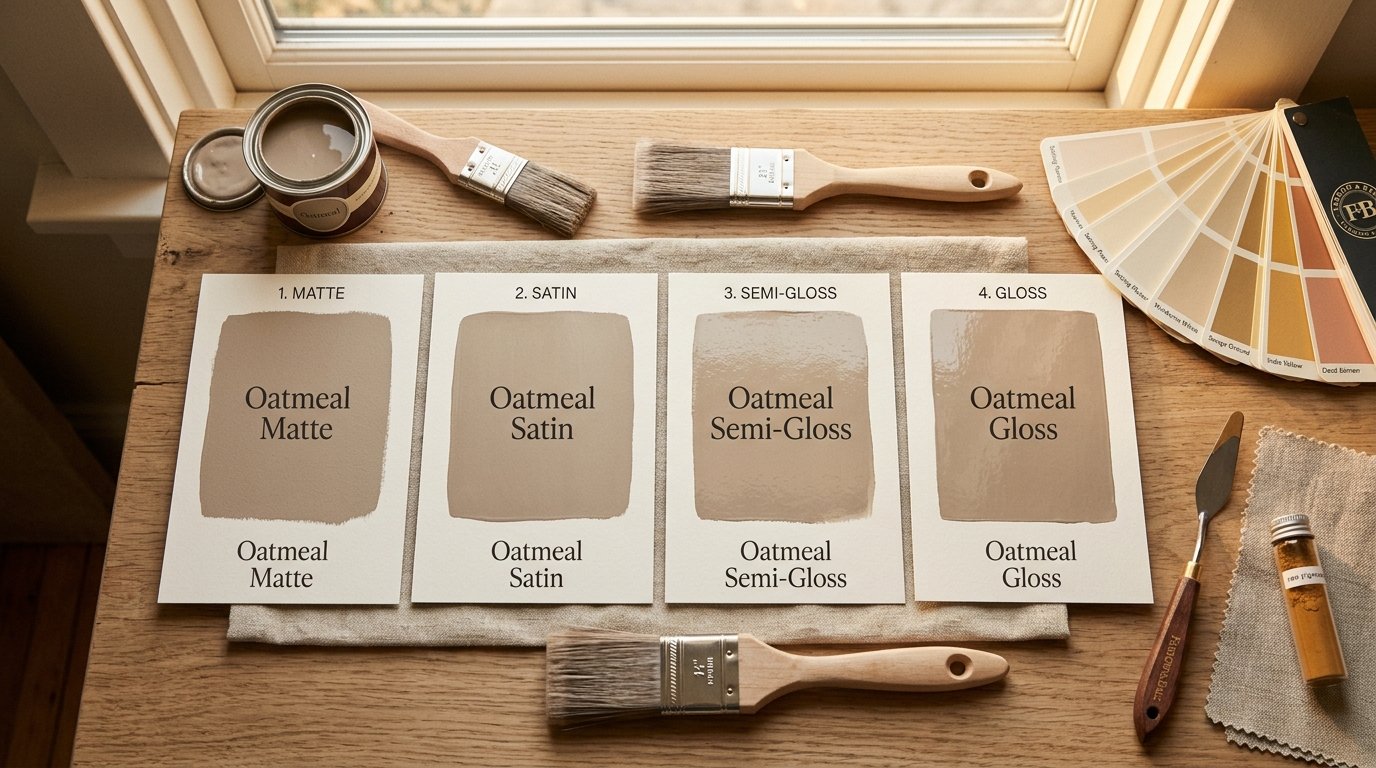
Walk into a paint store and you will quickly notice that choosing a colour is only half the decision. The other half — the one that determines how a room actually looks and holds up over time — is the finish. Matte, eggshell, satin, semi-gloss, gloss: these words appear on every tin, yet most people pick one almost randomly, based on what they used last time or what the painter recommended without much explanation.
That is a shame, because the finish changes a room dramatically. The same shade of warm ivory in a dead-flat matte can feel rich and gallery-like; in a high-gloss, it looks lacquered and hard. The same terracotta in a satin cleans up easily after the monsoon humidity has settled; in a matte, it scuffs and marks within weeks. Getting the sheen right costs nothing extra but makes everything about the result better.
This guide works through every finish level methodically — what it is, how it behaves, which rooms it suits, and which it does not — so you can make that decision with confidence rather than guesswork.
Why Sheen Level Matters More Than Most People Realise
Sheen is a measure of how much light a dried paint film reflects back. A high-sheen surface scatters light predictably and looks bright and reflective. A low-sheen surface scatters light in many directions at once, which means it absorbs more of it visually and appears soft and non-reflective.
Three things change with sheen level: how the room feels, how the surface wears, and how easy it is to clean. High sheens are harder, more durable, and more washable, but they also highlight every imperfection on the wall — every trowel mark, patch repair, or skim coat ridge catches the light and becomes visible. Low sheens hide those imperfections beautifully but are softer, more prone to marking, and more difficult to clean without leaving a shiny scrub mark.
That tension — hide imperfections versus withstand daily life — is what drives most finish decisions, and the right answer depends entirely on the room, the people using it, and the quality of the underlying surface.
The Five Finish Levels and What Each One Does
Flat or dead matte. This is the lowest sheen available, and it does one thing better than any other finish: it absorbs light so completely that the wall seems to recede. Imperfections, patches, and even substrate variations effectively disappear into the flat surface. Colour appears at its deepest and most saturated here, because there is no reflected glare washing it out. The limitation is equally clear — flat finishes are not designed to be scrubbed. A damp cloth removes marks most of the time, but repeated wiping, especially in a patch, eventually creates a shiny area that stands out against the surrounding flat. Use flat where the wall will not be touched regularly, and where the substrate is less than perfect.
Eggshell. Named for the subtle sheen of a bird's egg, eggshell sits just above flat. It has almost none of the reflectivity that highlights wall flaws, but it crosses an important threshold: it can be wiped down more reliably than a dead-flat finish without leaving a burnish mark. For most reasonably smooth interior walls in living spaces and bedrooms, eggshell is the finish that balances sophistication with practicality. It is also less temperature-sensitive in application than higher sheens, which matters in variable Indian indoor conditions.
Satin. Satin carries a perceptible, soft lustre — not enough to see a clear reflection, but enough to make a wall feel slightly alive and light-responsive. This is the finish that rewards good surfaces, because the gentle sheen picks up natural and artificial light in a way that flat finishes do not. It is also appreciably more durable and washable than eggshell, which is why it is the natural choice for rooms that see regular contact: children's rooms, family dining areas, hallways, and anywhere that little hands or luggage finds the wall regularly. Satin also handles the humidity cycles of an Indian kitchen or bathroom better than lower sheens, as the harder film resists moisture penetration more effectively.
Semi-gloss. This is the finish of trim, doors, windows, and woodwork in most well-specified interiors, and there are good reasons for that tradition. Semi-gloss is noticeably shiny, highly washable, and hard enough to withstand the repeated contact that door frames and skirting boards endure. On walls, it is used deliberately in kitchens, bathrooms, and utility areas where the surface will be wiped down frequently and where moisture resistance genuinely matters. The trade-off is that semi-gloss is unforgiving of surface irregularities — on a wall with any texture, patches, or undulation, the sheen will make every one of them visible in raking light.
Full gloss. This is the lacquer end of the spectrum. Full gloss reflects almost everything that hits it, produces a hard, mirror-like film, and is the most durable and washable finish available in a standard paint range. On interior walls, full gloss is a deliberate design choice — usually for a single feature wall, a painted ceiling detail, a built-in piece of furniture, or an accent element where the reflective, almost jewel-like quality is the point. It has no tolerance for substrate imperfections; every bump and hollow will be visible. For this reason, walls destined for full gloss must be filled, sanded, and prepared to a much higher standard than walls that will be finished in matte.
Matching Finish to Room: A Practical Room-by-Room Guide
Bedrooms. This is where most people spend the most time looking at walls at close range, often in soft light. The case for matte or eggshell is strong here. A flat wall absorbs light, creates a sense of calm and enclosure, and makes the colour feel richer. Minor substrate imperfections — especially common in older homes — disappear entirely. Eggshell gives just enough durability for the occasional mark near a bedside table or light switch without compromising the quiet character of the room.
Living rooms and formal reception areas. These rooms vary. A living room that sees children, pets, and daily activity benefits from satin — the added durability and cleanability matter in practice. A formal drawing room or a more minimally used space can carry matte or eggshell beautifully, particularly if the substrate is sound and the colour is a complex, deep tone that a flat finish will render at its best. Feature walls in living rooms are where satin and even semi-gloss are sometimes used deliberately for the way they catch afternoon light.
Kitchens. Satin at minimum, semi-gloss where the wall will be splashed or wiped regularly. The moisture resistance, washability, and hardness of a higher sheen earn their place in a kitchen. Matte above the cabinetry, where the wall stays dry and clean, is perfectly fine; matte at splash-zone height will absorb oil mist and will not clean properly. The most practical approach for a kitchen is satin or semi-gloss for all the walls that will realistically be wiped down, and a consistent ceiling in flat white.
Bathrooms. Moisture is the deciding factor. Flat and eggshell finishes hold water against the wall long enough to cause damage in a steam-filled room, and their softer films harbour mildew more readily. Satin is the sensible minimum for a bathroom; semi-gloss is a defensible choice in compact, poorly ventilated ones. For walls that will receive direct water — the area around a basin or near a shower — a fully water-resistant system is the right specification, and a high sheen supports that.
Children's rooms. Satin, without debate. Children's rooms get marked, touched, and wiped down constantly. A washable, durable satin finish survives that cycle without deteriorating. Matte in a child's room is a choice that leads to repainting within two years. The softer appearance of matte simply does not hold up to the contact these rooms receive, and the scrub marks left by cleaning a flat finish look worse than the original marks.
Hallways, stairwells, and passage walls. These are contact-heavy surfaces that often receive little direct natural light. Satin is the correct specification in most cases — washable, slightly reflective in a way that helps the space feel less dark, and durable enough for bags, hands, and furniture corners. The small amount of added sheen over eggshell genuinely helps a dark hallway feel more open without looking clinical.
Ceilings. Flat white is the standard across essentially every room type, and it is standard for good reasons. Ceilings are rarely touched, never washed, and any sheen on a ceiling picks up light from below and emphasises every undulation in the plaster — of which most ceilings have many. A flat ceiling recedes visually, making the room feel taller. Reserve a sheen on a ceiling only for an intentional design feature, done on a perfectly prepared surface.
Woodwork, doors, and trim. Semi-gloss is the historic standard for trim, and it remains right. Woodwork absorbs impacts, needs to be wiped, and frames the room in a way that justifies a harder, shinier finish. Full gloss on trim makes a particularly crisp statement — the door becomes a defined architectural element rather than background — but it demands preparation as close to perfect as you can achieve.
How Surface Quality Should Influence Your Choice
This cannot be said clearly enough: the worse the surface, the lower the sheen. It is not a suggestion; it is physics. Sheen works by reflecting light, and any surface irregularity will cast its own shadow when seen in raking light. A flat finish eliminates that problem by scattering light in so many directions that no individual shadow is defined. A gloss finish eliminates it by the opposite extreme — only the most perfect of surfaces. Everything in between reveals imperfections proportionally to its sheen level.
If your walls have any of the following — patch repairs that are flush but slightly different in texture, undulation in the plaster field, joints from a skim coat, filled and sanded marks — you should lean toward eggshell or flat rather than pushing up to satin or semi-gloss in rooms where the spec would otherwise allow it. The result will look cleaner, not rougher, because imperfections will simply not register.
If your walls are genuinely smooth, well-prepared, and on sound plaster, you can use higher sheens without concern and take full advantage of the durability and light-response they offer.
Applying Interior Finishes: What Actually Matters on the Day
The right finish specified on the correct surface still needs to be applied well. A few practical points make the difference between a finish that looks its best and one that looks acceptable.
Apply two coats. A single coat of any interior finish, regardless of sheen, almost never achieves the full film thickness the product is designed for. Two full coats at the correct spreading rate deliver colour, coverage, and durability. A third coat over an area where coverage looks thin is always preferable to over-loading a single coat and getting sag marks or uneven drying.
Keep a wet edge. Higher sheens in particular show lap marks when a section dries before the adjacent section is rolled. Work each wall continuously from corner to corner, keep the roller moving into the wet film, and cut in the edges while the field is still fresh. This applies more critically to satin, semi-gloss, and gloss than to matte, but it is good discipline regardless.
Control the environment. High humidity slows drying and can cause a finish to stay tacky for far longer than the stated time. Direct sun hitting a wall as you paint it dries the surface before the film can level properly, leaving roller texture visible. Early morning is usually the best time to paint interior walls that catch afternoon sun, and using a dehumidifier in a damp bathroom during a paint project is worth the effort.
Do not over-thin. Thinning is sometimes necessary to get the right application consistency, but every drop of solvent or water you add reduces the film thickness and the final sheen level. Over-thinned semi-gloss can end up looking like satin; over-thinned satin can approach eggshell. Stay within the manufacturer's stated range and adjust your technique rather than your dilution if application feels difficult.
Prime adequately. Uneven absorption — common over patches, repaired areas, or previously unpainted surfaces — produces uneven sheen in the topcoat even when the colour appears uniform. A properly primed, uniformly absorbing wall gives the topcoat an even base to sit on, and the finish level reads consistently across the whole elevation.
The Most Common Finish Mistakes and How to Avoid Them
- Using flat paint in a kitchen or bathroom because it is a favourite finish elsewhere — it will not perform in those conditions.
- Specifying high gloss on an imperfectly prepared wall — every flaw will be more visible after the gloss than before it.
- Using the same finish on walls and ceilings — ceiling flat works for a reason; a sheen on a ceiling almost always creates problems.
- Mixing finish levels across a single elevation by touching up in a different sheen — the touched-up area will show even in the same colour.
- Choosing a finish based on a small sample chip — sheens look different at full scale and in the actual room lighting; always test a painted area of at least half a square metre before committing.
- Over-thinning to stretch coverage and unknowingly reducing the sheen level by diluting the binder.
- Applying a single coat on rough surfaces hoping it will cover — additional coats deliver film depth, not just colour, and film depth is what gives sheen its quality.
Zorvanta Interior Finishes for Every Sheen and Surface
Our Deco Gold Pro interior range is formulated to deliver consistent sheen levels from flat through to a rich satin, with the fade resistance and film quality that the Indian indoor environment demands. For rooms where durability and washability are the priority — kitchens, children's rooms, bathrooms, and heavily used living areas — the higher sheen variants of Deco Gold Pro provide a hard, cleanable surface without the clinical look of a full-gloss industrial finish.
For decorative feature walls where the finish itself is part of the design, our Texture Gold Pro range works in conjunction with flat and low-sheen topcoats to produce relief surfaces that catch light in a controlled, deliberate way.
Explore the full interior range, or read our companion guides on decorative texture finishes, surface preparation before painting, and diagnosing and fixing common paint problems. If you would like a recommendation for a specific room or project, contact our team or request a quotation.
Frequently Asked Questions (FAQs)
1. What is the difference between matte and eggshell paint?
Matte is a dead-flat finish with virtually no sheen, while eggshell has a very subtle, low-level lustre similar to the surface of a bird's egg. Both hide wall imperfections well, but eggshell is slightly more durable and can be wiped down more reliably without leaving burnish marks. Matte is better for ceilings and rooms with imperfect plaster; eggshell works well in most living areas and bedrooms.
2. Is satin or semi-gloss better for a kitchen?
Both are appropriate, and the choice depends on how much direct moisture the wall sees. Satin is generally right for most kitchen walls — washable, durable, and not so shiny that every imperfection shows. Semi-gloss is a defensible step up for walls very close to cooking zones or splash areas, where maximum washability and moisture resistance matter most.
3. Can I use matte paint in a bathroom?
In general, no. Flat and matte finishes hold moisture against the surface, are difficult to clean in a steam-heavy environment, and are more prone to mildew in poorly ventilated bathrooms. Satin is the sensible minimum for a bathroom; semi-gloss is better in compact or poorly ventilated ones.
4. Why does my new paint look patchy in certain light?
That is likely a sheen variation across the wall — caused by uneven absorption, patch repairs that were not primed, a second coat applied before the first had dried fully, or touch-ups using a different sheen level. The reliable fix is to prime the whole wall uniformly and recoat corner to corner in one session rather than touching up individual areas.
5. Should trim and walls be the same or different sheen?
Almost always different. Walls in most rooms benefit from a lower sheen (flat, eggshell, or satin) that hides imperfections and creates a soft, liveable character. Trim — doors, frames, skirting, windows — benefits from a higher sheen (semi-gloss or gloss) because it is harder, more washable, and it creates a defined contrast between the wall field and the architectural edges, which makes the room feel more complete and intentional.
6. What paint finish should I use for children's rooms?
Satin, without exception. Children's rooms are wiped down constantly, and satin provides the durability and washability to survive that cycle without deteriorating. Flat finishes in children's rooms develop scrub marks that look worse than the original marks they were cleaning, and need repainting far sooner.
7. Does a higher sheen mean better quality paint?
Not necessarily. Sheen level is a property of the formulation, not a direct indicator of quality. A premium flat finish can be far superior in colour depth, coverage, and durability to a cheap semi-gloss. Choose sheen level based on where the paint will go and what it needs to do, and choose the product quality based on the manufacturer's reputation and formulation — they are two separate decisions.
Need help choosing the right finish?
Talk to our team or request a tailored quotation for your project.