Heat-Resistant Paints: The Complete Guide to High-Temperature Coatings for Engines, Pipes & Industrial Surfaces
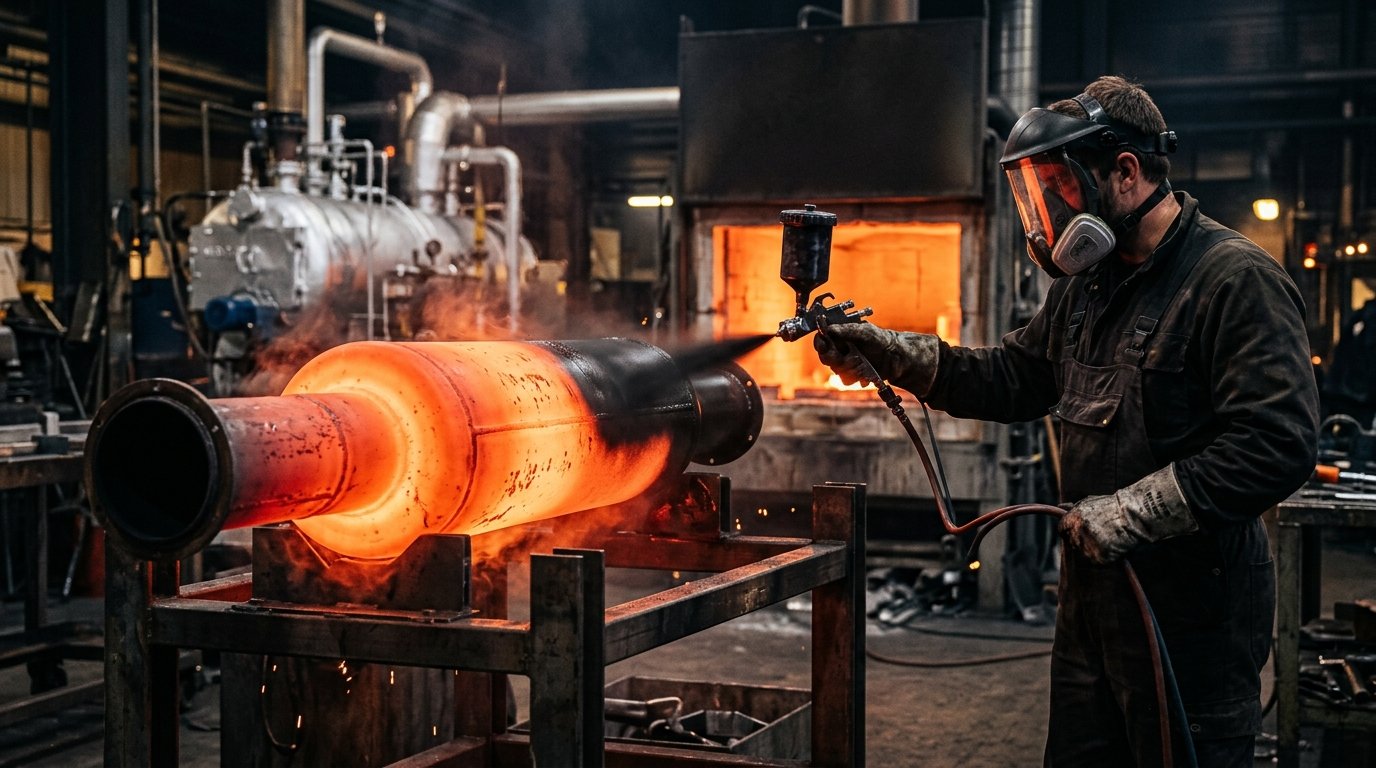
Standard paint fails in the heat. Not dramatically, not immediately — but with absolute certainty. Apply an ordinary exterior emulsion to an exhaust manifold, and within a few weeks of engine running temperature it will blister, peel, and burn away, leaving the bare metal exposed to corrosion and looking worse than if it had never been painted at all. Apply a conventional metal primer to a boiler casing and the first sustained operating cycle will break the binder chemistry, chalk the surface, and strip adhesion from the substrate. Temperature is a chemical and physical force that most coating formulations are simply not designed to withstand.
Heat-resistant paints exist to solve this specific problem. They are engineered differently from the ground up — different binders, different pigments, different curing mechanisms — to maintain their physical integrity and protective function at temperatures that would destroy a standard coating. Understanding how they work, where they are genuinely needed, and how to apply them correctly is the difference between a protective coating that lasts and one that fails in the first month of service.
This guide covers the chemistry behind high-temperature coatings, the range of surfaces and applications they serve in India, how to select the right product for the temperature range you are dealing with, and the preparation and application steps that determine whether the coating performs for years or weeks.
Why Ordinary Paint Fails at High Temperatures
To understand heat-resistant paint, it helps to understand why conventional paint fails under heat. Standard paints — whether solvent-based alkyds, water-based acrylics, or conventional epoxies — rely on organic polymer binders: long-chain molecules that give the cured film its flexibility, adhesion, and film-forming properties. These organic binders begin to break down at relatively modest temperatures. Alkyd resins, the backbone of most conventional metal paints and primers, start to soften and degrade at around 120–150°C. Acrylic emulsions perform similarly. Epoxies are better, with some grades resisting up to 200°C, but they still fail under sustained heat beyond that point.
The failure mechanism is thermal degradation of the polymer chains. The heat breaks the molecular bonds in the binder, the film becomes brittle, loses adhesion to the substrate, blisters as trapped volatiles expand, and eventually chalks or burns off entirely. The pigments may remain, but without a functional binder to hold them and anchor them to the surface, they provide neither colour nor protection.
Heat-resistant coatings address this by using inorganic or semi-inorganic binders — primarily silicone resins — that maintain structural integrity at far higher temperatures. Silicone polymers have a backbone of silicon and oxygen rather than carbon, and that silicon–oxygen bond is significantly more stable under heat than the carbon-to-carbon bond in organic polymers. A quality silicone-based heat-resistant coating can maintain adhesion, flexibility, and protective performance at temperatures from 200°C to 600°C depending on the formulation, with specialist coatings reaching beyond 700°C for extreme industrial applications.
Temperature Ranges and What They Mean in Practice
Not all high-temperature coatings are the same, and the temperature rating of a product is its most critical specification. Choosing a product rated for 250°C when the surface reaches 450°C is as much a failure of specification as using standard paint entirely.
Up to 200°C. This range covers surfaces such as domestic radiators, hot water pipes, and the exterior casings of some domestic appliances. High-quality alkyd or modified alkyd paints can handle this range, and this is where some premium conventional metal paints cross into heat-resistant territory. A radiator enamel rated to 150–180°C is a realistic and practical choice for domestic heating elements.
200°C to 400°C. This is the working range for most automotive exhaust systems, outdoor barbecue grills and smokers, the exterior of wood-burning stoves, industrial conveyor systems, and many light industrial machinery components. Silicone-alkyd blended coatings or medium-temperature silicone resin systems are the correct specification for this range. These products retain flexibility and adhesion through the thermal cycling — heating up, cooling down, heating again — that these surfaces experience in normal use, which is often as damaging as sustained high temperature.
400°C to 600°C. At this range, the applications shift to furnace casings, boiler externals, kiln equipment, industrial pipework near heat sources, and the exhaust manifolds of commercial vehicles and industrial engines. Only genuine high-silicone-content heat-resistant coatings perform reliably here. The pigments used also shift — standard iron oxides and organic pigments fade or discolour above 300°C, and coatings for this range use heat-stable inorganic pigments, primarily iron oxide grades and aluminium flake, which give many high-temperature coatings their characteristic silver, charcoal, or dark red appearances.
Above 600°C. This is the territory of ceramic-loaded coatings, specialist thermal barrier products, and industrial formulations for continuous process equipment — kilns, incinerators, and refractory-adjacent surfaces. These are not general-purchase products and require specialist specification and application.
Key Applications in the Indian Context
India presents a specific set of applications for heat-resistant coatings that are worth addressing directly, because the combination of climate, construction type, and industrial base creates demands that differ from temperate-climate markets.
Exhaust systems on two-wheelers and commercial vehicles. India has one of the world's largest two-wheeler populations, and exposed exhaust pipes — running at temperatures of 300–500°C depending on engine size and load — are a common application for heat-resistant coating. Bare steel exhaust pipes corrode rapidly in the monsoon and in urban environments with road salt and contamination. A correctly specified heat-resistant coating extends the life of the system significantly and maintains the appearance of an aftermarket or professionally finished exhaust without the cost of stainless steel or chrome plating.
Industrial machinery and plant equipment. Manufacturing facilities, foundries, brick kilns, textile dyeing units, and food processing plants all have equipment that operates at elevated temperatures. The exterior surfaces of ovens, driers, and heat treatment equipment benefit from heat-resistant coatings that protect the underlying metal from corrosion while maintaining a professional, identifiable appearance. In food processing environments, food-safe high-temperature coatings are available for surfaces that may contact food or operate near food contact zones.
Domestic cooking and heating appliances. Tandoor ovens, outdoor barbecue equipment, wood-burning stoves, and the external surfaces of domestic gas equipment all require coatings that resist the heat of regular use. In outdoor settings — common for tandoors and barbecues — the coating also needs to withstand India's full weather cycle, from monsoon humidity to summer heat. Formulations that combine heat resistance with weather resistance are the correct choice in these applications.
Boilers and hot water systems. Industrial boilers and large hot water storage systems operate at external surface temperatures well above what conventional paint tolerates. A correctly specified heat-resistant primer and topcoat system on a boiler casing prevents corrosion of the metal jacket, maintains the integrity of the insulation system by keeping the outer surface sealed, and extends the service life of equipment that represents a significant capital investment.
Structural steel near heat sources. Not all structural steel operates at high temperature, but steel near furnaces, near exhaust runs, or in proximity to industrial heat sources can reach temperatures that destroy standard intumescent or epoxy coatings. Identifying these zones and specifying heat-resistant coatings rather than standard structural steel coatings prevents premature failure in areas that are often difficult to access for recoating.
Surface Preparation for High-Temperature Coatings
The preparation requirements for heat-resistant coatings are, if anything, more demanding than for standard metal coatings, because the thermal cycling these surfaces experience creates significant mechanical stress at the coating-substrate interface. Any weakness in preparation — residual rust, inadequate degreasing, insufficient surface profile — will be exploited by the repeated expansion and contraction of the metal during heating and cooling, eventually lifting the film at the point of weakness.
All rust and existing loose coating must be removed. For new steel, this means abrasive blast cleaning to a minimum Sa 2.5 standard (near-white metal), or at minimum mechanical preparation to St 3 (thorough mechanical cleaning) where blast is not available. For repair over existing coatings, remove all flaking and loose material, feather the edges of sound coating, and clean the exposed metal. Wire brushing or grinding that leaves embedded rust or mill scale behind is not adequate preparation for a heat-resistant system.
Degreasing is critical. Oils, grease, fingerprints, and machining fluids are invisible barriers to adhesion, and they are particularly problematic on automotive and mechanical components that have been handled during assembly. Solvent wipe or industrial degreaser treatment before any other preparation step is essential. Any contact with bare hands, oil-contaminated rags, or oily compressed air after preparation will recontaminate the surface. Apply the first coat within four hours of preparation on bare metal to prevent flash rusting, particularly in humid conditions.
Application: What Makes the Difference
Heat-resistant coatings can be applied by brush, roller, or spray depending on the product and the surface geometry. Complex shapes — exhaust systems, piping runs, machinery with many external components — are most efficiently and evenly coated by spray, which penetrates corners and recesses that a brush application misses. Flat surfaces such as boiler casings and appliance bodies can be brushed or rolled effectively.
Apply at the correct film thickness. More is not better with high-temperature coatings — over-application produces a thick film that traps volatiles during the curing process, leading to blistering and pinholes. Follow the manufacturer's stated dry film thickness range precisely. Two thin coats are almost always superior to one heavy coat.
Curing is often a two-stage process. Many silicone-based heat-resistant coatings require an initial air-drying period followed by a thermal cure — the first time the coated component reaches operating temperature, the coating undergoes a final crosslinking reaction that develops its full heat resistance. This means the coating may appear and feel completely dry after air drying, but it has not yet achieved its rated performance. Do not be alarmed by a slight odour or smoke during the first heat cycle — this is the final cure completing, not the coating failing.
Allow adequate drying time between coats, and do not rush to apply heat before the air-dry stage is complete. Applying operating temperature to an under-cured film can cause blistering in the same way that applying a second coat before the first is dry causes surface defects in standard paints. Patience through the curing sequence directly determines whether the coating holds up for years or fails prematurely.
Colour Options and Practical Aesthetics
One practical limitation of most high-temperature coatings is the restricted colour palette. The heat-stable inorganic pigments available for formulations above 300°C limit the achievable colours significantly — flat black, silver-aluminium, charcoal grey, and dark red are the most common, with some formulations achieving cream or mid-grey at the lower end of the heat-resistant category.
Flat black is the most widely available and broadly applicable colour for high-temperature applications. It is the standard specification for exhaust systems, stoves, and cooking equipment where performance takes priority over colour choice. Silver-aluminium coatings use aluminium flake pigment suspended in a silicone binder — the flake geometry creates a reflective surface that both resists heat and reflects radiant energy, making it suitable for pipework and equipment where reducing radiant heat emission from the surface is a secondary benefit. The limited palette is a function of chemistry, not choice, and for the applications where heat-resistant coatings are genuinely necessary, the practical benefit far outweighs any restriction on colour selection.
The Zorvanta Approach to High-Temperature Protection
At Zorvanta, our Metal Gold Pro range includes heat-resistant formulations developed for the specific demands of Indian industrial and automotive applications. The silicone resin base of our high-temperature coatings delivers consistent performance across the 200–600°C working range, with an aluminium and iron oxide pigmented system that provides both heat stability and genuine corrosion inhibition during cold operating periods when condensation and ambient humidity present the greater threat to metal integrity.
We recognise that heat-resistant coating requirements vary enormously across applications — a domestic tandoor, a two-wheeler exhaust, and a boiler casing each require a different product matched to the correct part of the temperature range and applied with the method appropriate to the surface geometry. Our team provides application-specific recommendations rather than generic product suggestions, ensuring the system you specify is genuinely suited to the surface temperature, the exposure conditions, and the serviceability requirements of your installation.
Explore our full metal and industrial coatings range, or read our companion guides on protecting metal surfaces from rust, metal coating durability, and automotive refinishing for cars and two-wheelers. For a recommendation specific to your equipment and operating conditions, contact our team or request a quotation.
Frequently Asked Questions (FAQs)
1. Can I use regular paint on an exhaust pipe?
No. Standard paint — including most conventional metal primers and enamels — will blister, peel, and burn off within weeks of the exhaust system reaching operating temperature. A silicone-based heat-resistant coating rated to at least 400–600°C is the correct specification for exhaust pipes and manifolds. Using the wrong product here costs more in the long run than getting it right the first time.
2. How do I know what temperature rating I need?
As a practical guide: domestic radiators need coatings rated to 150–200°C; automotive exhaust systems and barbecue equipment need 400–600°C; industrial furnace and boiler casings typically need 400–600°C. When in doubt, choose a product rated higher than your estimated surface temperature — the cost of over-specifying is negligible compared to the cost of a premature failure and reapplication.
3. Why does my heat-resistant paint smoke the first time I heat it?
This is normal and expected. Many silicone-based heat-resistant coatings undergo a final thermal cure the first time they are brought to operating temperature. The smoke or odour during this first heat cycle is residual solvents and cure by-products leaving the film as the coating completes its crosslinking. Ensure good ventilation during the first heat-up cycle and the behaviour will not recur on subsequent uses.
4. How many coats of heat-resistant paint should I apply?
Follow the manufacturer's guidance, but typically two coats at the recommended dry film thickness per coat. Applying excessive coats or very heavy individual coats increases the risk of blistering during the thermal cure cycle, as the thicker film traps more volatiles. Two thin, even coats at the correct spreading rate consistently outperform a single heavy application.
5. Can heat-resistant paint be used outdoors in the monsoon?
Many heat-resistant coatings provide reasonable weather resistance alongside heat resistance, but performance varies by formulation. For applications that will face both operating heat and full outdoor weather exposure — outdoor cooking equipment, exhaust systems, industrial piping — look specifically for products specified for both heat and weather resistance, as not all heat-resistant products have equivalent outdoor durability.
6. Does heat-resistant paint need a special primer?
Not always — many heat-resistant coatings are formulated as self-priming direct-to-metal systems. However, where severe corrosion is a risk or where surface preparation cannot achieve the ideal standard, a compatible heat-resistant primer applied before the topcoat provides additional adhesion and corrosion resistance. Always verify compatibility — a standard zinc-rich primer under a heat-resistant topcoat is unsuitable because zinc can react at high temperature. Use only primers specified as compatible with the topcoat system by the same manufacturer.
Need help choosing the right finish?
Talk to our team or request a tailored quotation for your project.